

Sidewalks are great places to play, aren’t they? If you want to ride your bike, a smooth sidewalk is much better than a busy street or a bumpy lawn.
If you prefer to play jacks or hopscotch, where do you go? The sidewalk, of course!
Most sidewalks are made of concrete. Concrete is not a natural element, like aluminum or iron.
Instead, concrete is a man-made building material. Concrete is made by combining crushed rock and sand with water and cement.
Although some people think cement is the same thing as concrete, it’s not. Cement is a general name for a special type of material that binds other materials together.
In other words, cement is like another name for glue. There are many different types of cements that can be used to make many different types of concrete.
When cement is mixed with water and crushed rock and sand, a chemical process called “hydration” causes it to bond together and harden to form concrete. Solidified concrete is like stone, and it’s used more than any other man-made building material in the world.
One of the uses of concrete is to make sidewalks. Unfortunately, when concrete dries, it shrinks a little bit.
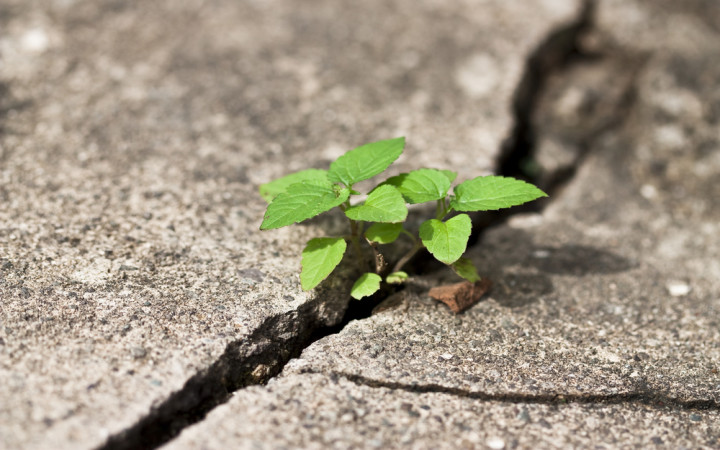
If you’re using concrete to make a sidewalk, the shrinking concrete will cause cracks to appear as it dries. To prevent sidewalks from cracking in random spots and breaking apart, builders make lines in sidewalks.
Of course, they don’t just call them “lines.” The technical term for sidewalk lines is “contraction joints.”
Contraction joints are placed in fresh concrete before the concrete dries and has a chance to create its own joints, which we call “cracks.” As the concrete dries and shrinks, any cracks that form should follow the path of the contraction joints since that’s where the concrete is thinnest.
If the cracks follow the contraction joints, the sidewalks won’t look as bad. They also won’t tend to form further cracks and break apart like they might if allowed to crack at random places.
Builders place contraction joints in fresh concrete with saws, special grooving tools or plastic strips called “zip strips.” They have to make sure that the joints are deep enough and made before the concrete begins to dry so that cracks won’t appear in the wrong places.


(6 votes, avg. 4.50 out of 5)


Cool! I think tomorrow’s wonder is about memory. I’m really good at memory games, so they are easy for me!!!!
That’s a GREAT guess about tomorrow’s Wonder, Missy! You’ll have to check back to see if you were right! Thank you for hanging out in Wonderopolis today and leaving us a comment!
Well it’s funny and the baby is sooo cute!
We like the video, too, Natalia! That little boy sure does like to hop a lot, doesn’t he? Thank you for visiting Wonderopolis today!
Dear Wonderopolis,
We loved the article. Tomorrow, for Poetry Friday, we are going to write sidewalk poems. Then we will go outside and write our poems on the sidewalk. We hope it won’t be raining.
Have you ever heard the saying, “Don’t step on a crack or you’ll break your mother’s back?” Do you know where that saying came from?
Thanks again!
Mrs. Johnson’s third grade
We are so excited to hear about your sidewalk poems, Mrs. Johnson’s third grade! We will send good wishes for great weather! We have heard the saying, “Don’t step on a crack or you’ll break your mother’s back,” but we’re not sure of its origin. That means it’s time for some more WONDERING! Thank you for leaving us this great comment today!
I actually never thought about how a sidewalk got its cracks, I figured it just happened! Sometimes, my friends and I would try to not walk on the cracks or the “contraction joints” while we walked across the sidewalks. I think I probably should pay a little more attention to the stuff about sidewalks, like the difference between concrete and cement, the reason the lines are there in the sidewalk and where the cracks come from. This wonder has really made me wonder!
We’re glad exploring this Wonder caused you to do a little extra WONDERing, Allison! It’s always good to take what you learn about something and strive to learn more, more, MORE! Thank you for leaving us this great comment today!
This is a wonderful wonder, because I’ve never thought about it before. It is more interesting then I thought it would be. I never knew sidewalk cracks actually had a name, contraction joints. Also, I always thought cement and concrete were the same thing. I wonder what people would do if cracks already were there in a sidewalk. I think the next wonder is about memory loss.
We thought it was interesting to learn new things about sidewalks, too, Jenna! Thank you for sharing this comment with everyone in Wonderopolis today, and also for guessing what you think tomorrow’s Wonder might be about! We can’t wait to see if you are right!
Hey, WONDEROPOLIS! I think that your next wonder should be, “Why is the sun yellow?” By the way, I thought today’s wonder was pretty interesting.
Thanks for letting us know what you thought about today’s Wonder of the Day®, Kate, and thank you for giving us your idea for a FUTURE Wonder, too!
Did you know there is a Wonder about the SUN already? It’s Wonder of the Day #332 – How Hot Is the Sun? You can visit it by clicking on this link: http://wonderopolis.org/wonder/how-hot-is-the-sun/.
I just wanted to ask if tomorrow’s wonder be about cupcakes and cakes or about alligators?
Those are all GREAT ideas for future Wonders of the Day®, Natalia! Thank you for suggesting them and for being an AWESOME Wonder Friend!
I thought this wonder was very interesting! I thought cement and concrete were the same thing. I thought cracks or “contraction joints” just happened because the sidewalk was old or worn. Now I know that when concrete dries, it cracks and that’s why there are cracks on the sidewalk. I also thought it was interesting to learn what is in concrete and how it is made. I used to play hopscotch on the sidewalk when I was little, and I still like to rollerblade or ride my bike on it, too. I wonder what tomorrow’s wonder will be?
We’re sure glad you learned all these awesome facts about sidewalks, Anne! It’s pretty neat to learn new things every day in Wonderopolis, isn’t it? We really enjoyed your comment!
Wonderopolis,
This is a really great wonder! I really enjoyed learning about sidewalks! I never knew that cement and concrete were not the same thing! I also never knew that cement is not a natural element! To go even farther, I wonder why sidewalks are mostly always white? Thank you so much for having this wonderful website and wonderful topics!!
Your comment made our day, Team Unger #2! We’re so glad you think Wonderopolis and the Wonders of the Day are WONDERful! Thanks for stopping by this Wonder about sidewalks…we’re glad you learned a lot!
If I misspell a word, do you correct the spelling and grammar? How do the students know this?
Thanks so much for your comment today, Sherry! We’re super excited to hear from Wonder Friends who are also awesome educators!
Because of the age range of our different Wonder Friend visitors, and for the benefit of everyone who visits Wonderopolis and gains even MORE knowledge by reading over the comments to each Wonder, we occasionally have to adjust the spelling of a word or two, or help by adding punctuation. We try very hard not to disturb the integrity of each comment’s content, though. We value every authentic comment, and try our best to reply to each one. We’re glad you stopped by Wonderopolis today!