

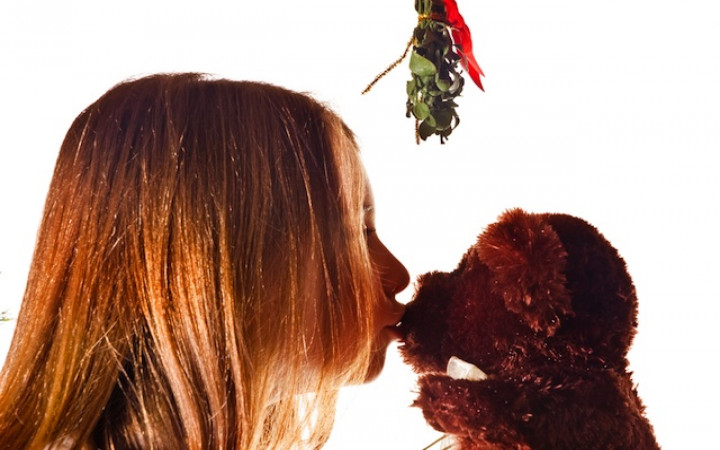
Mistletoe makes its annual appearance each December as millions of Americans and Europeans hang a sprig of it in their doorways during the holiday season. According to custom, if you're caught standing under the mistletoe, you may get a kiss.
So what is it about this little plant that gives it its power to make people pucker up?
For centuries, mistletoe has been considered a plant that increases life and fertility. Celtic Druids living in the 1st century A.D. viewed it as a symbol of vivacity, since it remained green while other plants were bare during winter.
Some historians believe the connection between mistletoe and a kiss comes from ancient Norse mythology. According to happier versions of the legend, Baldur (sometimes spelled Baldr or Balder) was killed by an enemy's arrow made of mistletoe. His mother, the goddess Frigg, wept tears onto the arrow. Her tears turned into white berries that she placed onto Baldur's wound, bringing him back to life. Overjoyed, Frigg blessed the mistletoe plant and promised a kiss to all who passed beneath it.
Although the legend of Baldur is often cited as the origin of the connection between mistletoe and a kiss, other historians point out that many versions of Baldur's story end quite differently. In these other versions, Baldur dies and is not revived. Given the age of these myths, it's certainly possible that happier versions were passed down over time, influencing future mistletoe traditions.
Mistletoe traditions have certainly evolved over time. For example, in ancient times, visitors would kiss the hand of a host under the mistletoe when they arrived. Since then, traditions have grown a bit more personal. Today, any couple caught standing underneath the mistletoe should prepare to pucker up!
So what, exactly, is mistletoe? The far-from-romantic answer is that it's a parasitic plant, which means it depends on another plant for survival.
Mistletoe can only grow if its seeds are carried to a “host" tree by birds that have eaten mistletoe berries. Typically, a bird will squeeze a mistletoe berry in its beak, squishing out a sticky, coated seed.
The bird eats the fruit and cleans the sticky coating, called "viscin," off its beak by wiping it against a nearby branch. As the viscin hardens, the seed becomes firmly attached to the host tree.
The mistletoe then invades the host, “stealing" nutrients and water from it. In fact, the scientific name for American mistletoe (Phoradendron) is Greek for “thief of the tree."
More fun facts about mistletoe:
- Birds can eat mistletoe berries, but they're highly toxic to humans.
- Approximately 20 species of mistletoe can be found on the endangered species list.
- Celtic Druids believed that mistletoe contained the spirit of the tree in which it grew; this was the only part of the tree that stayed green all winter.

