

Today’s Wonder of the Day was inspired by Autumn. Autumn Wonders, “Why do bees buzz?” Thanks for WONDERing with us, Autumn!
It’s springtime here in Wonderopolis, and the air is positively BUZZING with energy. Pollen is in the air, flowers are in bloom, and one of the planet’s hardest-working insects is very busy. What are we talking about? The bees, of course!
When it comes to bees, you may wonder what all the buzz is about. The answer is that they’re a pretty important part of the large ecosystem of planet Earth. In fact, some experts estimate that humans have bees to thank for as much as one-third of the food they consume. They’re one of the world’s greatest pollinators.
Have you ever WONDERed why bees buzz? The sound is produced by the insect’s rapid wing beats as they fly through the air. This creates vibrations that the human ear detects as buzzing. The bigger a bee is, the slower its wings beat. The slower its wings beat, the lower the pitch of the buzzing will sound.
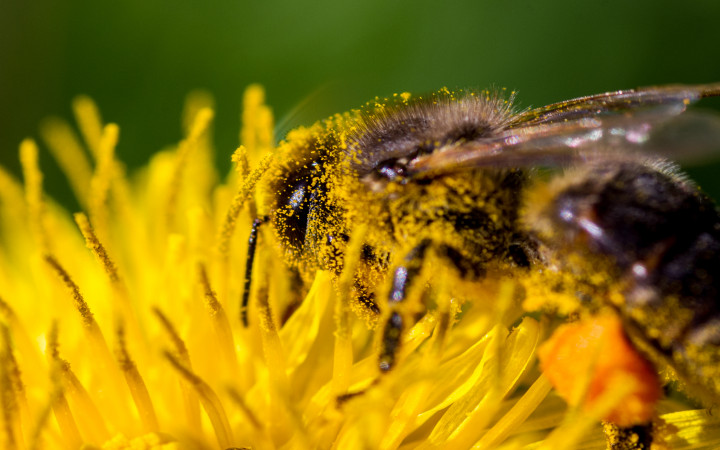
Buzzing isn’t just for show, however—it also serves an important purpose. When certain species, such as bumblebees, visit a flower, the buzzing and vibrations of their wings and bodies cause pollen to shake off the flower. The pollen then attaches to the bee’s body. It’s deposited on the next flower the bee stops to visit. This transfer of pollen from flower to flower is called “pollination.”
Bees also buzz when defending themselves or their hives. If you’ve ever gotten too close to a bee in nature, you know this to be true! The familiar buzz will warn you to check your surroundings and move away from any bees you see. Otherwise, you may interrupt the insects’ pollination work—and receive a painful sting in the process.
The next time you find yourself snacking on fresh fruit or vegetables, thank a bee! These small insects play an important part in maintaining life on Earth. Without them, the spring and summer months would be much less colorful.
Standards: NGSS.LS1.A, CCRA.L.3, CCRA.L.6, CCRA.R.1, CCRA.R.2, CCRA.R.4, CCRA.R.10, CCRA.SL.1, CCRA.SL.2, CCRA.W.4, CCRA.W.7,

