

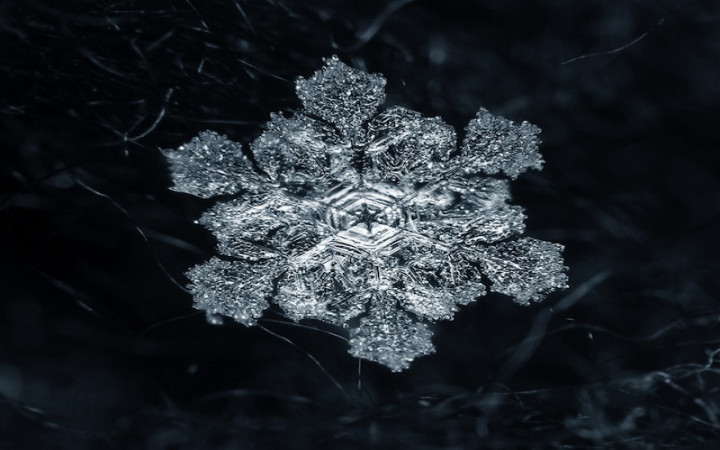
Today’s Wonder of the Day was inspired by Kyah from Murray, KY. Kyah Wonders, “Why are all snowflakes different ?” Thanks for WONDERing with us, Kyah!
Do you enjoy watching snow fall on a cold winter day? We love to sip on hot cocoa while we watch snowflakes pile up outside. Later, we’ll head out to build snowmen, make snow angels, and start a snowball fight! Snowy days can be a lot of fun. Have you ever heard that no two snowflakes are exactly alike? Well, that isn’t exactly true. However, the chance of finding twin snowflakes is very, very, very low.
Scientists say the chances of two snowflakes being exactly alike are about 1 in 1 million trillion. That’s a one followed by 18 zeros, so it’s very unlikely! Meteorologists think there are 1 trillion, trillion, trillion (a one with 36 zeros!) types of snowflakes.
A snowflake has three basic ingredients: ice crystals, water vapor, and dust. The ice crystals form as water vapor freezes on a tiny piece of dust. The dust particles come from many places. It could be from flower pollen, volcanic ash, or even meteors.
Snow forms in very cold clouds. As water droplets attach themselves to the ice crystals, they freeze, creating an even larger ice crystal. In any crystal, molecules line up in a pattern. In ice crystals, water molecules line up and form a six-sided shape called a hexagon. This is why all snowflakes are six-sided!
The temperature of the cloud determines the shape of an ice crystal. Likewise, the amount of moisture in the cloud determines the size of the ice crystal. More moisture will create a bigger crystal. When several ice crystals stick together, they form a snowflake.
As snowflakes tumble through the air, swirling and spiraling, they each take a different path to the ground. Each snowflake falls and floats through clouds with different temperatures and moisture levels. This shapes each snowflake differently. Two snowflakes from the same cloud will have different sizes and shapes because of their different journeys to the ground.
You may never find an identical pair of snowflakes, but they can be grouped by similarities in their patterns. People who study snowflakes group them into shapes like stellar, fernlike, needle, and many others. The next time you’re out in the snow, try to catch snowflakes to examine. But be careful! Snowflakes are delicate and melt easily.
Most fun snow activities involve pushing many snowflakes together. How else could you possibly make a snow fort? Still, seeing a single snowflake up close is worth the effort. You might just find a new shape that’s never been seen before!
Standards: NGSS.PS1.A, CCRA.L.3, CCRA.L.6, CCRA.W.3, CCRA.L.1, CCRA.L.2, CCRA.R.1, CCRA.R.2,

