

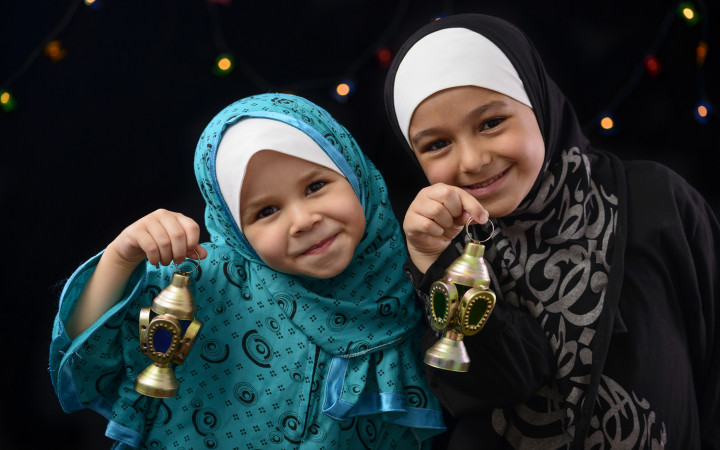
Today’s Wonder of the Day was inspired by Mimi. Mimi Wonders, “what is Ramadan?” Thanks for WONDERing with us, Mimi!
Many people around the world celebrate a religious holiday called "Ramadan" each year. It's one of the holiest times of the year for followers of Islam. Ramadan is the ninth month of the Islamic calendar, and the celebration lasts the entire month.
The Islamic calendar is a lunar calendar, which means it's based on the moon. This is different from the Gregorian Calendar, which most nations use as their civil calendar. Ramadan begins each year when the first sliver of the crescent moon (waxing crescent moon following a new moon) appears in the ninth month. In 2022, Ramadan will be celebrated from April 2 until May 2.
How do people celebrate Ramadan? One of the primary wayn is by fasting. Fasting means to abstain from food. Muslims celebrating Ramadan only eat when it's dark outside. From sunrise until sunset, they try not to eat or drink anything.
Fasting allows them to focus on other things, such as their faith, prayer, and doing good deeds for others. Fasting also helps followers of Islam learn self-control, sacrifice, and empathy for others less fortunate. Ramadan is usually marked by increased generosity and charity.
Muslims pray often during Ramadan. In addition to the five daily prayers, they also recite a special Ramadan prayer—called the Taraweeh Prayer (English "Night Prayer")—which is two to three times longer than their daily prayers.
At the end of the day, Muslims break their fast with more prayer and a special meal called the iftar. This meal usually begins with the ritual eating of a date, which is a fruit the Prophet Muhammad is said to have eaten.
Traditionally, the evening meal is a special time to visit with family and friends. Some families also exchange gifts when they get together. In the morning, fasting begins again.
Why do Muslims celebrate Ramadan? The reason centers on the Laylat-al-Qadr ( English: "Night of Power"). Muslims believe it was on this night that Allah delivered the Quran (the Muslim holy book) to the Prophet Muhammad.
The Laylat-al-Qadr is the holiest night of the year in Islam. It occurs on an odd-numbered night during the last 10 days of Ramadan (either the 21, 23, 25, 27, or 29, depending on the year). Muslims believe it is on this night that Allah determines the course of the world for the year to come.
At the end of the month, Ramadan comes to a close with the feast of Eid-Ul-Fitr (English: "Feast of Fast Breaking"). Friends and families gather together for large meals. Many cities also have large celebrations.
Overall, Ramadan is a special time for reflection and prayer. Muslims focus on faith and strive for purity in all their thoughts and actions. Does your family celebrate Ramadan? What other times of the year are important to you?
Standards: CCRA.L.3, CCRA.L.6, CCRA.R.1, CCRA.R.2, CCRA.R.4, CCRA.R.10, CCRA.SL.1, CCRA.W.2, CCRA.L.1, CCRA.L.2

