

#118

What Is an Emperor Penguin?

Jan. 29, 2011

Antarctica is more than a land of snow and ice. Some very special species of animals have adapted to life in the coldest places on Earth.

Today we’ll meet one of Antarctica’s most charming residents: the emperor penguin. Read on to join the flock.

Have you ever wondered…

  • What is an emperor penguin?
  • How long can an emperor penguin stay underwater?
  • What is an emperor penguin creche?

Did you know?

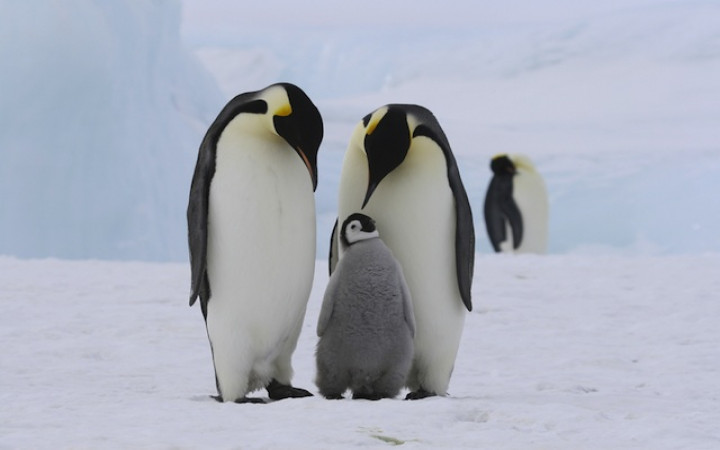
Emperor penguins are the largest penguins on Earth. At almost 4 feet tall and weighing 50 to 90 pounds, these penguins grow to be the same size as many elementary school students!

Emperor penguins live in Antarctica, the coldest habitat on Earth. Temperatures in Antarctica can drop as low as -140° F. The shape of its body helps the emperor penguin survive life in these frigid temperatures.

The emperor penguin’s body has a thick layer of blubber insulated by a thick layer of down covered by feathers. These three layers provide triple protection from harsh conditions and extreme cold. In addition to trapping body heat in, the down feathers also keep cold air and water out.

The emperor penguin’s diet consists mostly of fish, squid and crustaceans. It catches its dinner by diving into the sea.

Although humans can’t stay underwater very long before they need to come up for a breath, emperor penguins can remain submerged for up to 18 minutes at a time!

This is possible thanks to specialized body systems. The emperor penguin’s blood allows it to function even with very low oxygen levels. In order to use as little oxygen as possible while diving, the emperor penguin can also slow its metabolism and stop any nonessential organ functions.

Each winter, the emperor penguin walks 30 to 75 miles over ice to breed. A single breeding colony can include thousands of penguins.

When a female emperor lays an egg, she immediately rolls it onto the father penguin’s feet. Male penguins care for the eggs until it is hatching time. During this time, male penguins can lose up to half of their body weight because they stay on shore caring for the egg and do not return to the sea to eat.

About seven weeks after birth, emperor penguin chicks form groups called “creches.” The penguins in a creche huddle together for protection and warmth, but they continue to be fed by their parents. Emperor penguin chicks can identify their parents from the group of adult penguins by the sound of their call.

At six months of age, emperor penguin chicks are fully grown. At this time, the adult penguins and all the chicks return to the open sea together. In the wild, emperor penguins live to be about 20, although some have lived to be 50 years old.

The emperor penguin, along with nine other species of penguins, may soon be included under the United States Endangered Species Act. Warming seas and industrial fishing have begun to change fish populations, making it more difficult for penguins to find enough food. The emperor’s habit and breeding colonies are also becoming disrupted by tourism.

Try it out!

If you want to meet an emperor penguin, you’ll need to travel all the way to Antarctica… or will you? Try this cut-and-fold paper craft to experience a bit of the Antarctic without ever leaving home!

Wonder words to know and use:

  • Antarctica
  • emperor penguin
  • habitat
  • frigid
  • blubber
  • insulated
  • down
  • crustaceans
  • submerged
  • breed
  • colony
  • creche
  • industrial
  • tourism

Still wondering?

Learn more about the emperor penguin’s habitat and behaviors through National Geographic Xpeditions’ What’s Happening to the Emperor Penguins? lesson plan.

Wonder what’s next?

Wonderopolis is in a bit of a sticky situation! Want to know what makes Super Glue® so super? Check out tomorrow’s Wonder of the Day.

How would you rate this Wonder of the Day?
1 Star2 Stars3 Stars4 Stars5 Stars  (1 votes, average: 5.00 out of 5)
Loading ... Loading ...
Share

6 responses to "Wonderopolis"

  1. kendall
    22. Jan, 2012 at 3:39 pm

    Thank you for sending this awesome video. I’ve never been the only person for reviews. I think that they are penguins.

    • Wonderopolis
      22. Jan, 2012 at 7:53 pm

      How COOL that you are the first Wonder Friend to leave us a comment on this Wonder of the Day®, Kendall! We appreciate you exploring this Wonder and letting us know you were here! :-)

  2. Paige
    25. Jan, 2012 at 8:58 pm

    Dear Wonderopolis,
    OMG, thank you for telling me this wonder! I think those penguins are so cute! I think tomorrow’s wonder is about penguins, again! BTW, this is so cool, Kendall is my sister. Love ya, Kenzie!
    XOXOXOXOXO,
    Paige ;)

    • Wonderopolis
      26. Jan, 2012 at 6:04 am

      We’re glad you enjoyed the PENGUIN Wonder, Paige! Thank you for always leaving us happy, enthusiastic comments! We can tell you love to learn new things and we do, too! :-)

  3. Elisa Waingort
    7. Feb, 2012 at 4:25 pm

    Senora Waingort’s grade 2 class says:

    We really liked the music in the video. Are those penguins calm sometimes? Those penguins look like the penguins in the movie Happy Feet. We think it’s funny that one of the penguins was trying to fly by flapping its wings at the beginning of the movie. The penguins looked cute. How did you know what the penguins were saying?

    • Wonderopolis
      7. Feb, 2012 at 5:13 pm

      Happy Tuesday, Senora Waingort’s grade 2 class! We really enjoyed hearing from you today! You guys did some GREAT WONDERing about penguins! We think the people who made the video might have just guessed what they THOUGHT the penguins might be saying. It’s fun to think about how animals communicate with each other, isn’t it? :-)

Leave a Reply

Your email address will not be published. Required fields are marked *

Connect with Facebook

*

You may use these HTML tags and attributes: <a href="" title=""> <abbr title=""> <acronym title=""> <b> <blockquote cite=""> <cite> <code> <del datetime=""> <em> <i> <q cite=""> <strike> <strong>