

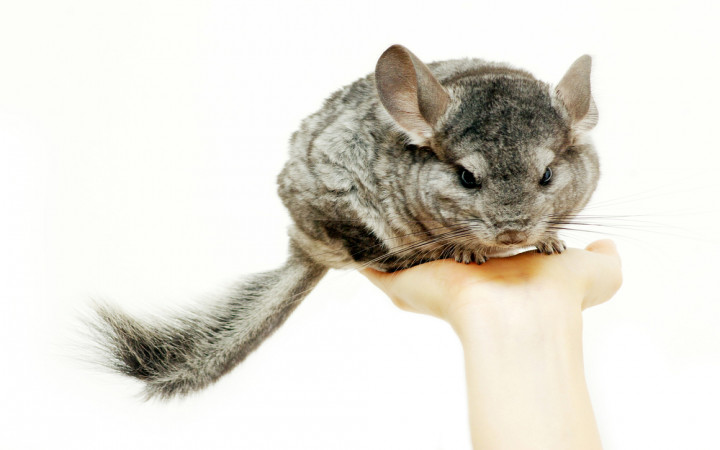
Chinchillas are small rodents native to the Andes Mountains in South America. Their name means “little Chincha” because they are named after the Chincha people of the Andes.
The Chincha were known for wearing the soft, velvety fur of the chinchilla. Chinchilla fur is extremely soft because each hair follicle sprouts about 60 hairs.
For more than a hundred years now, wild chinchillas have been rare. Too many people have hunted them for their fur to make coats and other clothing.
To make one full-length coat of chinchilla fur, as many as 150 pelts are needed because chinchillas are fairly small. Overhunting led to the extinction of one species of chinchilla and drastically reduced the population of the remaining species.
Today, it’s illegal to hunt wild chinchillas, but illegal hunting still occurs. The remaining species of wild chinchillas remain close to extinction.
Reduced populations of chinchillas mean that they are often raised domestically on farms today. Many people keep domestic chinchillas as pets in their homes.
In the wild, chinchillas live in burrows underground or rock crevices. They tend to stay in social groups (called “herds”) of as few as a dozen or as many as 100 chinchillas.
They have many natural predators, including birds, skunks, snakes, cats and dogs. Luckily, they are great jumpers. Chinchillas can usually jump up to six feet.
One of their best defenses, though, is their lifestyle. Chinchillas are crepuscular, which means they are most active during twilight (dawn or dusk), as opposed to nocturnal animals, which are mainly active at night. Many predators look for food at night, while others are most active in the middle of the day when the sun is the brightest.
By limiting their activity to twilight times like dawn and dusk, chinchillas and other crepuscular animals reduce the chance that they’ll fall victim to a predator. Other crepuscular animals include cats, dogs, rabbits, guinea pigs, ferrets, deer, wombats and bobcats.
If you have a chinchilla as a pet, you may notice that it’s most active at dawn and dusk. At other times of the day when you’re active, it may prefer to rest.
Chinchillas in the wild eat plants, fruits, insects and seeds. Domestic chinchillas, though, mainly prefer a diet of hay.
Like rabbits, chinchillas must wear down their teeth by chewing on wooden sticks, chew toys or pumice stones. Their teeth never stop growing. If they get too long, their teeth can keep them from eating, so they need to wear them down constantly.
Chinchillas can be challenging pets at times because they need a lot of exercise. When they exercise, you may notice that their big ears get red.
Since they cannot sweat, chinchillas get rid of their excess body heat by sending extra blood to their ears. Chinchillas can get overheated easily, so it’s best to keep them in areas under 80° F.
Speaking of ears, chinchillas are often used as test animals by those researching hearing issues. The chinchilla’s range of hearing and inner-ear anatomy closely resemble that of a human, making them a good substitute for humans in auditory research.
After chinchillas exercise, they may want to take a bath, even though they don’t sweat. Chinchillas instinctively clean their fur, but they don’t use water!
Since their fur is so soft and dense, it’s hard to dry. Trapped water can cause fur rot or fungus growth. Yuck!
Instead, chinchillas take dust baths. That’s right! Dust baths. Can you imagine bathing in dust? When you’re dusty, that’s when you have to take a water bath!
When chinchillas take a dust bath, they roll around in a dust made up of fine pumice, which is made up of tiny bits of volcanic rock. The dust soaks up oil and dirt in their fur. If you have pet chinchillas, pet stores sell bags of special chinchilla dust you can use to give them a dust bath.


(7 votes, avg. 3.86 out of 5)


does a chinchilla’s size help it in any way to stay away from predators? Can you find them in OH? Are they in endangered?
Those are all very good questions, Erica/Mc! Thanks for asking them!
We think their smaller size and ability to jump would help chinchillas more easily get away from predators. It’s sad, but because of illegal hunting, many species of wild chinchillas are endangered.
hey i <3 your web site
Hi, riley! We’re so happy that you “heart” Wonderopolis! Have a WONDERful day!
Chinchillas are so cute <3
We agree, Jusin! Do you know anyone who has one as a pet?
I love chinchillas! I’ve only seen them in pet shops though
. Do you know if those are bred specially for being pets? I <3 Wonderopolis!!!
Hello,
! The kind of chinchillas that are bred to be pets and sold in pet shops are called “domesticated.” They aren’t wild. Thanks so much for visiting Wonderopolis today!
MY SISTER LOVES CHINCHILLAS!!!!!!! my sister wants one as a pet, she almost bought it, i wish she did
Maybe she will consider a chinchilla as a pet again sometime soon, Emily! They sure are cute and cuddly! We thought it was really interesting to learn about their coats and those dust baths!
Hi wonderopolis!! I love today’s video! it is sooo adorable. They are definitely right. It would be hard to be nocternal in a second grade classroom!!
My sister’s freind has two chincillas named Snowflake and Rasin. They always get let out of their cage, then they will run alll around the basement. My sister told me that they are pretty fast.
I think that tomorrow’s wonder is… maybe car racing or horse racing, or swim team, or track and field. I have many ideas, so I can’t wait to see what it could be!!
Hi, Meredith/MC! It sounds like Snowflake and Raisin are quite a handful! We bet they are really cute, though! Thanks so much for commenting today and for being an AWESOME Wonder Friend!
I love Chinchillas!!!
We do, too, Brock! Thanks for visiting Wonderopolis and commenting today!
I love them too
Hi, Hannah! We hope you are having a GREAT day!
Do Chinchillas bathe in volcanic ash.
That’s a GREAT question, Janelle! The dust chinchillas prefer to bathe in is made from pumice (volcanic rock), so it really isn’t the same as the ash that shoots from the top of the volcano during eruptions. The volcanic rock is ground up to make a fine dust.
Thanks so much for visiting Wonderopolis! We hope to hear more from you this summer!
Hi! I loved the video, it was so cute. I had no idea that chinchillas are native to the Chincha people. I really liked this wonder.
We’re so happy to hear that you enjoyed this Wonder, too, Olivia! Thank you for leaving us such a nice comment!
Hello, Wonderopolis. I’ve always been curious to know more about chinchillas. How many are still in the wild and can chinchillas swim? Thanks for teaching me more about chinchillas (like they are crepuscular animals).
Hello there, Wyatt! We’re glad you WONDERed some more about chinchillas after exploring this Wonder of the Day® about them! We don’t know for sure how many chinchillas are left in the wild. Researchers and scientists are monitoring and tracking chinchillas all the time. The more we know about them, the more we can help keep them from becoming extinct! About the swimming…we’re sure there are chinchillas who have enjoyed a swim or two once in a while, but our guess is that they don’t care for it very much. Their fur is soft and very dense, so it’s hard to dry when it gets wet. Plus, water can get trapped in their fur and cause fur rot or fungus growth…not good! Thanks for your comment today!
Hello, Wonderopolis. I love chinchillas. It’s near Christmas, and I might ask for one. Thanks for letting me learn more about the mischievous little creature. Thanks!
Hey, Wyatt! We think it’s GREAT that you learned a lot about chinchillas by exploring this Wonder! Please let us know if you get one for Christmas! We’d love to hear what it’s really like to have one as a pet!
I can’t even watch the video, so I don’t know, but it’s kinda cute, I guess.
Hi, Supasonic! We’re sorry you’re having trouble viewing the video for today’s Wonder! We hope you learned some new things by exploring the other parts, though! We also hope you’ll try visiting this Wonder again soon!
Wow! I didn’t know chinchilla’s ears get red when they exercise! How many chinchillas are left? I think chinchillas are really cute! I had to look back and skim to find the text about the chinchilla’s ears turning red. This wonder was awesome! You rock, Wonderopolis!
Well, we think YOU rock for visiting Wonderopolis over your holiday break, Ryan! We’re proud of you for learning some cool new facts about chinchillas!
My sister got a chinchilla and it’s the most cutest and fluffiest thing ever. It doesn’t move around much because we just got it last month.
p.s. I LOVE wonderopolis
That’s so awesome, Brandon! Thank you for sharing your family’s chinchilla story with us!
Chinchillas are AH-DORABLE!!! I love the little things!!! I had 1 when I lived in Oklahoma! They are soooo cute!!
We think it’s cool that you used to have a chinchilla, Jessie! Thanks for sharing your experience with everyone in Wonderopolis today!
Oh man chinchillas are soooooooooooo cute. If I could I’d hug one forever until I had to let go.
We think that’s such a kind comment, Tyler J! We are glad you shared your love for chinchillas with us!