

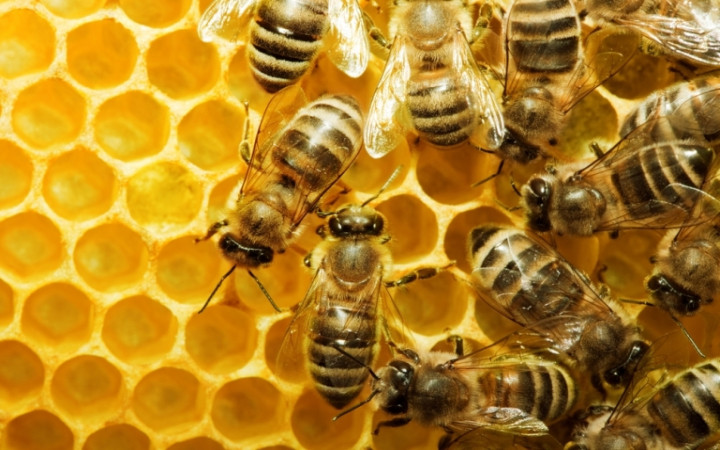
Today’s Wonder of the Day was inspired by Bo from NC. Bo Wonders, “Where do bees go when it's cold?” Thanks for WONDERing with us, Bo!
When winter rolls around, bears hibernate and birds fly south, but what about the bees? Like every other creature on earth, bees have their own unique ways of coping with cold temperatures during the winter season. One way bees prepare for the winter is by gathering a winter reserve of honey.
Honeybees head to the hive when temperatures drop into the 50s. As the weather becomes cool, the honeybees gather in a central area of the hive and form a “winter cluster." A winter cluster is much like a huddle you may have seen at a football game — except it lasts all winter!
Bees have one main job in the winter — to take care of the queen bee. This means they must keep her safe and warm.
In order to do so, worker bees surround the queen and form a cluster with their bodies. The worker bees then flutter their wings and shiver. This constant motion and continuous use of energy is how the bees keep the inside temperature of the hive warm.
In order to keep shivering, the bees must have enough honey. This is how they get their energy. One of the most important jobs of the beekeeper in the winter is to make sure the honey supply stays full so the bees can keep shivering.
Though the queen is always at the center of the cluster, worker bees rotate from the outside to the inside of the cluster, so no individual worker bee gets too cold. The temperature of the cluster ranges from 46 degrees at the exterior to 80 degrees at the interior. The colder the weather is outside, the more compact the cluster becomes.
In order to produce body heat and stay alive, honeybees must rely on honey for energy. Some studies have found that hives of honeybees will consume up to 30 pounds of stored honey over the course of a single winter. On warmer days, bees will leave the cluster briefly in order to eliminate body waste outside the hive.
Fun facts about bees:
- Honeybees are the only insect that produces food eaten by humans.
- Worker honeybees are female.
- The average worker bee produces only 1/12 teaspoon of honey over her lifetime.
- A worker bee lives about 6 weeks. The queen bee can live to be 5 years old.
- Honey never spoils.
- To make one pound of honey, bees must visit 2 million flowers.

