

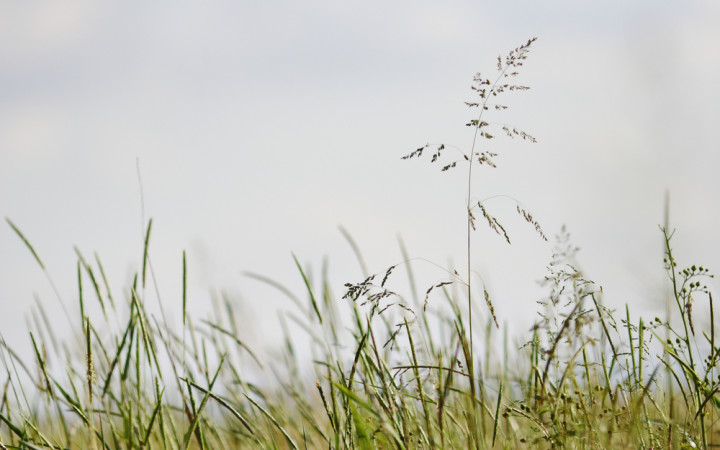
Kentucky Bluegrass — also known as Poa pratensis or Common Meadow Grass — is the most popular planting grass in the United States. It can be found in lawns in every state because it can grow easily almost anywhere and can withstand cold temperatures.
You may be thinking, “I've seen a lot of grass and none of it's blue!" You're right. Kentucky Bluegrass is a funny name, as it turns out, because it didn't come from Kentucky and lawns of Kentucky Bluegrass are green, not blue.
Although it's the most popular grass in North America, Kentucky Bluegrass isn't native to North America. Instead, it's native to Europe, Asia and Northern Africa. European settlers most likely brought it with them when they settled in North America.
Kentucky Bluegrass forms beautiful, lush green lawns. Its root system interweaves in a way that makes it particularly dense.
When you think of walking barefoot on a beautiful carpet of green grass, it's Kentucky Bluegrass you're thinking of. Kentucky Bluegrass is used often in parks and to create sports fields, too.
In the summer, Kentucky Bluegrass will grow about one to two inches per week in normal weather conditions. Experts recommend mowing regularly to keep Kentucky Bluegrass lawns at a height of about two inches for an ideal lawn.
Kentucky Bluegrass is not named for its leaves because they're always green. Since it's used mainly for lawns and kept short, it always appears green.
If, however, you let Kentucky Bluegrass grow to its natural height of two to three feet, you'll notice clusters of small blue flowers that blossom at the tops of the stems.
The Kentucky part of Kentucky Bluegrass came about as a result of Europeans naming the northern part of modern-day Kentucky the Bluegrass Region, because of the huge meadows of blue-flowered grass that grew there. If you're lucky enough to find a field of Kentucky Bluegrass that has grown to its natural height, you'll definitely see where the name bluegrass comes from!
Today, more than 100 varieties of Kentucky Bluegrass have been developed. Since the 1950s, nearly all Kentucky Bluegrass seed has been produced by specialized farms in Washington, Oregon and Idaho.

