

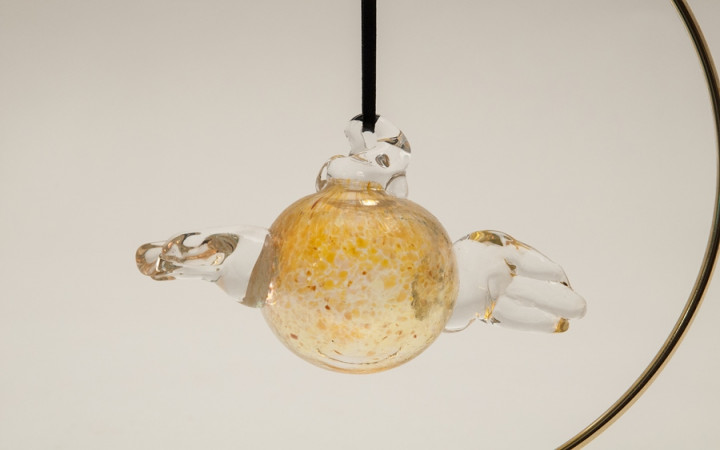
Take a look at the world around you. What would it look like without glass?
No windows, no computer screens, no televisions… the world wouldn’t be the same, would it?
Have you ever noticed how all glass is not clear? The windows in your house are probably clear, but what about soda bottles?
Have you ever seen stained glass windows in a church? Or maybe your house has a light fixture made of stained glass?
Believe it or not, delicate glass gets its colors from some of the hardest substances known to man: metals. Did you even realize that there are metals in glass? It’s true!
Glass starts out as a finely ground mixture of sand and scraps of broken or waste glass called “cullet.” Cullet is created when glass is recycled.
These materials are sifted and put into a furnace with a variety of additives, depending on what type of glass is being made.
The sand and cullet must be heated to their melting point to make glass. This means glassmakers need a furnace that can produce temperatures over 2,900° F!
When the sand and cullet melt, a red-hot glowing liquid is formed. This is glass in its purest form.
Long, long ago, glass was made by hand. The process was very slow and dangerous. Today, large factories produce huge amounts of glass.
However, some artists still choose to blow glass by hand in specialty shops. If you ever get the chance to visit a glassblower’s shop, don’t miss it. Seeing glass made by hand is a WONDERful experience!
The first people to experiment with glass had no control over its color. Over time, though, they learned — probably by accident — that adding certain substances to the molten glass mixture would produce different colors of glass when cooled.
The ancient Egyptians and Romans developed many different colors of glass. In the 8th century, a chemist named Gerber discovered that metal oxides were the secret ingredients for making colored glass.
Early religious groups helped to drive experimentation with colored glass. Stained glass windows were in great demand as many churches, temples and mosques were built hundreds of years ago.
Stained glass artists required a wide variety of colors to create their beautiful works of art. To make stained glass windows, artists use glass that has already been colored by the method described above.
They cut pieces of many different colors of glass and fit them together to form beautiful windows that are truly fabulous works of art. Stained glass window makers often use a metal, such as lead, to make an outline of their picture, which they then fill in with small pieces of colored glass.
Today, recipes for colored glass call for the addition of powdered metal oxides, sulfides or other compounds to the molten glass mixture. Here are some common additives and the colors they produce:
- cobalt oxide — blue-violet
- cadmium sulfide — yellow
- gold chloride — red
- antimony oxide — white
- sulfur — yellow amber
- uranium oxide — fluorescent yellow, green
- chromic oxide — emerald green
There are also certain compounds, such as manganese dioxide and sodium nitrate, which can be used with certain types of molten glass to remove other impurities to create clear glass.


(12 votes, avg. 4.25 out of 5)


Whose glass objects are shown in the photograph on today’s opening page?
Hi, Debra! Isn’t the colorful glass artwork beautiful? It is by an AMAZING artist named Dale Chihuly.
If you’d like to explore his work further, you can visit his website: http://www.chihuly.com/. You can also read about a beautiful glass sculpture he created for the lobby of the Bellagio hotel in Las Vegas by visiting this link: http://www.bellagio.com/amenities/fiori-di-como.aspx. Thank you so much for your comment!
I thought this wonder of the day was very cool. Especially how they colored the glass. My mother told me about the time she went to Italy and saw glass being made. She said it was so beautiful. Someday maybe I will learn to color glass.
Your mom’s trip to Italy sounds AWESOME, Maddy! What an opportunity she had! We think it would be so interesting to see an artist make such beautiful glass! Thanks for being such a GREAT Wonder Friend!
I know someone who blows glass and colors it.
Wow, Lily! That must be exciting to watch! People who work with molten glass have to be super careful and very skilled at what they do. So many beautiful items can be made by glass artists, though! Thank you so much for commenting today!
Hey Wonderopolis!
I think that this wonder is so cool!
I never knew how coloring glass was done.
I have some stained glass windows in my home. They are so beautiful!
How do are colors like pink made, though?
Until the next wonder,
What an AWESOME comment and question, Anna B! Perhaps pink glass is made by putting smaller amounts of gold chloride (the additive that makes glass red) in with the clear molten glass to make a “lighter red” or pink color. We will all have to do some more WONDERing about this one!
How is it made by color?
Hi, Julia! Thanks for commenting on this Wonder of the Day®! Adding different compounds, like metal oxides, to the the glass while it’s being made turns it different colors! You can find out the colors each compound makes by reading the Wonder above!
My family and I go to a lot of Chihuly art galleries. Everything they do is so exquisite! I love it when they blow it into the form that they want it to shape in. It is also a relief to know that cullet is recycled! I’m not all that into global warming or anything, but it’s good to know that old things can become new! I also think that it’s really cool that glass blowing is so old that Egyptians did it! But coolest of all is that adding color to glass came around by accident. It’s fun to think about how that accident came about. Did someone mess up only to find that they made a discovery of a lifetime? Maybe the boss got super mad and then got rich! Well that’s my tangent! But I’ve got to say that was a wonderful wonder!
We’re glad you thought this Wonder was WONDERful, Allison! We have really enjoyed reading your comments today! They let us know all the cool things you are learning from visiting Wonderopolis! We also love how you are making personal connections to each Wonder you visit…that is so AWESOME!
Dear Wonderopolis,
If colored glass breaks, does the stuff they make it with spill out? Also, can there be some parts in stained glass stay clear?
From the awesomest, most radical girl in the world, SARAH
Those are GREAT questions, Sarah! There are many stained glass windows and pieces of stained glass art that have clear glass in them, too! Since colored glass is solid (it doesn’t have stuff inside it to give it color, the color is part of the glass), if it breaks, it will shatter just like clear glass. Thank you for doing some extra WONDERing about this Wonder of the Day®!
Hey,
My cousin is a glass blower (he’s the only 1 in the english-speaking Caribbean) and I have always been fascinated by his work. It looks soo cooool just watching. He even let be blow one! I was so excited! When he first started though, I thought it was a pretty boring career choice until he literally showed me how to make glass “come alive”.
His business produces glass pens, hair beads, plaques and lots more.
Thanks for creating this site. I was wondering how he was able to colour the glass.
Thanks SO MUCH for sharing about your cousin, Azalea! How COOL that he gets to do something he loves every day and make AMAZING glass art at the same time! We think it’s super neat that you got to try your hand at glass blowing, too…AWESOME!
The artist is not Dale Chihuly. The artist is a glassblower with The Art of Fire. I worked for them when they were in Savage, MD. Dale Chihuly is well known but he is one of thousands of glassblowers working today in the USA.
Hi there Schan, thanks for sharing your comment with all of us at Wonderopolis! How COOL that you have worked with The Art of Fire team — that must have been an amazing experience. The artist in the video is indeed from The Art of Fire and we learn that there are many methods to coloring glass and artists around the world who have tailored their craft. Dale Chihuly’s glass umbrellas are featured as the Wonder image– you can find it under the “photos/videos” tab under the article. Thanks for sharing your awesome experience while you were at The Art of Fire!
Do machines make all the glass or do people help with the making of it?
Hey there, Pizzacuttercat! It’s a combination of both! Some types of glass are hand-made, hand-blown, and some types of glass are manufactured with the help of machines. Thanks for WONDERing with us!
It is cool because they get to do that stuff and be carful not to burn themselves & I would like to do that too!!
Great point, Wonder Friend Unicorn! People who color glass for a living are very experienced when it comes to handling fire safely. We are so glad you’ve been thinking about how they work, what they do, and how you plan to get involved! AWESOME WONDERING!