

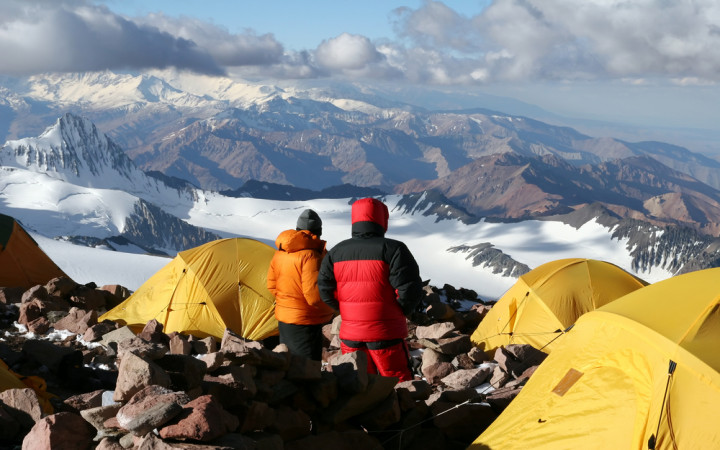
Do you think you’d ever want to try to climb to the top of Mt. Everest? What do you think the greatest challenge would be? Surviving in the cold weather? The difficulty of the physical climbing?
Would you believe there’s a challenge that you might not even realize? What are we talking about? Altitude sickness, of course!
Altitude sickness — sometimes called mountain sickness — affects mountain climbers, hikers and other people at high altitudes. Mild cases of altitude sickness might involve a headache and a feeling of extreme exhaustion.
Serious cases can involve a life-threatening build-up of fluid in the lungs (called high altitude pulmonary edema (HAPE)) or the brain (called high altitude cerebral edema (HACE)). HAPE can make breathing very difficult. If untreated, HAPE can lead to respiratory failure and even death. Similarly, HACE can lead to swelling in the brain, coma and ultimately death.
As elevation increases, the amount of oxygen in the air decreases. If you climb or hike a tall mountain, your body has to adjust to the fact that there’s less oxygen in the air. Altitude sickness usually occurs at elevations above 8,000 feet.
If you ascend slowly, your body has time to make the necessary adjustments. For example, many climbers find that they can avoid altitude sickness if they ascend no more than 1,000 feet per day.
Altitude sickness can be triggered by ascending too rapidly. It can also happen if you overexert yourself during the first 24 hours at a higher altitude. Extremely cold weather and not drinking enough water might also result in altitude sickness.
If you’re heading toward a high-altitude area, you should be aware of the signs and symptoms of altitude sickness. These can include exhaustion, headache, nausea, dizziness, shortness of breath, lack of appetite and trouble sleeping.
HAPE and HACE have more severe symptoms. These can include trouble breathing, coughing, fever and lack of coordination. If any of these symptoms occur, it’s important to get to a lower elevation as soon as possible and seek professional medical treatment.
With cases of mild altitude sickness, you should stop any further ascent until your symptoms improve. Get to a lower elevation, drink plenty of water and get some rest. Use over-the-counter pain relievers for headache. Keep an eye on your symptoms and, if they don’t improve, seek medical help as soon as possible.


(8 votes, avg. 3.50 out of 5)


Wow! I didn’t know you could go that high! I WONDER how high you could go!
Hey there, Andrew! Thanks for WONDERing with us today, we are so glad you enjoyed our atmospheric Wonder! We bet you’ll learn more about climbing to new heights with this Wonder about Mt. Everest: http://wonderopolis.org/wonder/where-is-the-highest-mountain/
We think tomorrow’s wonder of the day will be about a stone with caving.
Hello Wonder Friends in Ms. Bayko’s Class! We’re so glad you’re using your awesome brains and imaginations to Wonder with us! Whatever will tomorrow’s Wonder be??!
Cool fact really interesting.
We’re so glad today’s Wonder was interesting to you, Livi! We Wonder if you have gone rock or mountain climbing before? We hope to go very soon!
Hello again, Wonderopolis! Miss Hobson’s kindergarten class here. We just learned all about altitude sickness. We loved looking at the beautiful mountains in the video. Thank you for sharing this wonder with us!! We now know that if we get altitude sickness, we just need lots of rest and lots of water. You are awesome!!
Thanks for visiting today, Miss Hobson’s WONDERful Class! We are so glad you shared what you learned about those beautiful mountains and how air thins at high elevations. Today’s Wonder taught us how to be safe if we’re feeling dizzy or lightheaded while we climb. There are so many great things to Wonder about, and we’re glad you’re here today!
Thoughts: We’re wondering if climbers could use oxygen masks when they climb, although we’re a little concerned about the weight of the tank. We’re also curious about the climber in the video. Do you know if he was successful in climbing to the top? When climbing, do climbers experience the symptoms gradually or instantly? Does the amount of gear worn by a climber effect the impact of alititude sickness? Do animals get altitude sickness?
Predictions: Do you know about the Statue of Liberty? What is a gargoyle? How did dinosaurs die out? Did cavemen make stone bricks? What is the least common stone? What is the most common stone? What is a meteor shower? What are tikis? What stone is the strongest? How are fossils made? How do people use stones to make fire? Have you ever seen Japanese picture? What is the rarest stone? When climbing, where do rock climbers sleep? Can stones make sound? How do volcanoes get their shape? Who are the Rolling Stones?
As always, our Wonder Friends in Mrs. Hess’ Class are doing a FANTASTIC job of WONDERing with us! HOORAY FOR YOU! Thank you for sharing all the other questions you formed after reading and watching today’s Wonder. Some climbers choose to wear oxygen masks when taking on a challenge like Mt. Everest. There are masks, specifically meant for climbers, that are lighter than oxygen masks and tanks you might see in a hospital. This helps the climber to stay safe in high altitudes without adding too much weight to their packs.
We like your question about animals and altitude! We would love to find out what you think about animals that live in high altitude areas… do you think they have adapted over time, or do they experience altitude sickness?
You are all doing a WONDERful job- thanks for sharing your SUPER guesses, too!
Dear Wonderopolis,
Nine of us think climbing a mountain would be exciting but we are a little nervous about altitude sickness. It sounds pretty bad.
We think tomorrow will be about the petoskey stone, coal, or even fossils.
Thank you for the wonders,
Mrs. Tillman’s 4th graders
Hey there, Mrs. Tillman’s 4th grade class! Thanks for visiting us to Wonder about mountain climbers and high altitudes today! We’re glad that we learned about ways to prevent altitude sickness: hydration, resting and listening to your body! We can’t wait to Wonder with you again… tomorrow’s Wonder is going to be SUPER!
Wow now I know the symptoms to altitude sickness. Wow thanks wonderopolis for teaching me somthing new every day.
I think tomorrow’s wonder is about rocks.
Hey there, Joaquin! Thanks for WONDERing with us today– we all learned something new and valuable about staying safe while climbing! We feel even more prepared for our next climb!
Thanks for sharing your guess about tomorrow’s Wonder… it’s going to ROCK!
That was okay not the best what is an altitude that is what you’re learning.
Hey there, Wonder Friend Stephanie! Thanks for visiting us today. We learned that altitude measures how high something is– like a mountain! Altitude is used to show the distance of something. We hope you learned something new today, Stephanie!
That is an amazing view! That mountain is really high!!!
We Wonder if you have any other amazing views, like a sunset or a calm lake, to share, Hailey? We LOVE WONDERing about cool views from different places! We’re so glad you enjoyed today’s Wonder! Keep up the great work!
Wow that’s high!! That’s a really good view. And I don’t have that sickness.
It’s pretty incredible, we agree, Baconator! Thanks for WONDERing with us about high altitudes and cool mountains! We are so glad you’re here!
This video was very interesting to me. At first I wanted to try to climb a mountain and to the top but after the video I don’t want to.
We are so glad you’re WONDERing with us today, Jaaron! We know that climbing mountains can be intimidating– it takes lots of energy, practice and the proper equipment! We believe in you, so keep your head high!
Wow! I couldn’t climb Mt. Everest after hearing about the symptoms but I did find this video very interesting.
Hi there, Wonder Friend H! We are glad you’re WONDERing with us today about mountain climbing and high altitudes! The good thing about symptoms is that they tell our body we need to take a break. When we’re feeling light-headed after a tough climb, it’s important to take a rest and drink lots of water to help our body regain strength. Thanks for visiting us today!
I thought that today’s wonder was interesting because this summer my uncle is going mountain climing and I want him to be safe.
I think that tomorrow is going to be about medusa.
We will be thinking of your uncle as he climbs that mountain, too, Leslie M! Thanks for sharing your thoughts about today’s Wonder– we can’t wait to find out what tomorrow will bring!
Hi wonderopolis can we be friends?
Thanks for sharing your comment, Bubba! We are proud to be your Wonder Friend! We Wonder what you learned from today’s cool Wonder?
Nice video.
Thanks so much, Aiden! We are glad you’re here today!
This was so cool can’t wait to see the next one byeeeeeeeeeeee.
Hey there, Joel! We are so glad you enjoyed today’s Wonder! We hope to see you soon!
Our second grade class is wondering which body part seems to be affected first or most often from altitude sickness. Thank you!
Great question from our Wonder Friends in Ms. Rehnke’s Class! HOORAY for WONDERing!
Usually you feel light in the head or queasy in the stomach if you are suffering from altitude sickness. Rest and water will help in the meantime!
We learned a lot about altitude sickness and Mrs. Nolan actually had altitude sickness once so she knows it feels rotten.
We’ve learned a lot on this website!
Thank you from
Makenzie, Scott and Austin
Thanks for sharing your comment, Mrs. Nolan, Makenzie, Scott and Austin! We sure hope you’re feeling okay today, Mrs. Nolan! We learned a lot from today’s Wonder, too, and we’re so glad we can share the Wonder with you! Have a super day, Wonder Friends!
Wow! Today’s wonder was really interesting! I can relate to this wonder a lot, because my family used to live in the mountains at 10,000 feet. You have to drink lots of water or else you will get bad headaches, and other stuff you have to do to prevent altitude sickness. Thank you for today’s wonder!
Berkleigh, how cool that you know so much about staying headache-free in the mountains! We remember that you lived in the mountains before– you and your sisters have mentioned that in another Wonder! We’re so glad you are here today and thanks for the reminders about staying hydrated! Great work!
That’s a great view in fact I’d probably say it’s the best view.
We’re so glad today’s in-the-sky Wonder was right up your alley, Jusin! We think a view like that deserves a Wonder! Thanks for sharing your comment today!
Hi Wonderopolis! We learned a lot today about altitude sickness. We learned about the side effects of altitude sickness. We are thinking that maybe climbing mountains isn’t as fun as we thought. We didn’t know that there were so many symptoms of altitude sickness.
Prediction: Tomorrow’s wonder might be about Stonehenge, petoskey stones, Easter Island or tombstones.
Hey Wonder Friends in Mrs. G’s third grade class! We’re glad you’re WONDERing with us today! We know the symptoms of altitude sickness don’t sound very nice, but staying hydrated and resting is important when you’re so high up! We Wonder if you have a state park near your school, so you can practice your hiking before you start to climb mountains?
We can’t wait for tomorrow’s Wonder. We hope you’ll join us!
Dear Wonderopolis,
We enjoyed seeing the video, it was cool to see a climber at the top of a mountain.
We think tomorrow’s wonder will be about Stonehenge, petoskey stones, or even ancient stones.
Thank you for the wonders,
Mrs. Witkowski’s 4th graders
Hey there, Wonder Friends in Mrs. Witkowski’s 4th grade class! We’re so happy this climbing Wonder made you smile– we liked learning about how to stay safe if we go mountain climbing!
Thanks for sharing your awesome guesses… we really think you’re on to something!
We are very excited about tomorrow’s wonder of the day. We have just studied mixtures and solutions by making our own crystal geodes in eggshells. We hope tomorrow might be something we can make connections to!
WOW, your classroom sounds like an awesome lab! We bet our Wonder Friends in Mrs. Swick’s Fifth Grade Class did a WONDERful job of making crystal geodes! ROCK ON! We can’t wait to Wonder with you tomorrow, Friends!
I love wonderopolis it’s the best thing ever since pie and Santa.
YOWZA, we really appreciate your comment, Merle M! We LOVE pie, so that means a LOT to us!
Thanks for being a great Wonder Friend!
We were talking about this in social studies.
What a great connection to what you’re studying, Antonio! We Wonder if you live in an area where altitude sickness is a common thing? We hope you’re staying hydrated!
Yes it was not fun, I had to go back home and we were going to Florida.
Oh boy, that doesn’t sound like fun, Guner! We’re sorry to hear that you experienced altitude sickness, but we hope you have a great trip next time! The most important thing is that you’re okay now!
WOW! We knew about altitude sickness from reading the Magic Tree House book, The Eve of the Emperor Penguin. It made us excited to learn more about this WONDER today. The video made us feel kind of dizzy.
We think tomorrow’s Wonderopolis is going to be about pyramids, ancient Egypt, mountains, rock climbing, or diamonds!
What a great connection to the book you’re reading in class, Miss Holden’s 2nd Grade Class! We Wonder if the Magic Tree House is located in the mountains, or if characters in the book climbed a mountain? We are excited to learn more about this book series! Thank you for sharing your awesome comment and guesses with us! You are great Wonder Friends!
Wow I didn’t know you could go that high and I once want to go to mountain but you said the scary moment. I was WONDERING if you can go that high for real? What kind of WONDERS do you have? Well see you wonder wonder lucky.
Hey there, Alvaro! Thanks for WONDERing with us today! People have climbed extremely high mountains, including Mt. Everest! WOW! We bet you’ll enjoy this Wonder, too: What is a Sherpa? http://wonderopolis.org/wonder/what-is-a-sherpa/
Hi how tall is Mt. Everest?
Great question, Wonder Friend G! We’ve got a Wonder just for you: http://wonderopolis.org/wonder/where-is-the-highest-mountain/
I get that sometimes.
We hope you’ll drink lots of water and take a break if you feel dizzy, Chrissy! We wouldn’t want you to be dehydrated or feel light-headed from the altitude!
I would like to climb the mountain some day. I never knew there was mountain sickness. I learned you can get mountain sickness when you go 8,000 feet in the air.
Hey there, Nadia T! We are so glad you’re WONDERing with us today– we learned something new about mountain climbing and staying healthy. We plan to stay hydrated and get lots of rest when we climb a mountain someday, how about you?
Altitude sickness does not sound fun at all. I was surprised to see so much snow on the mountain! I don’t think I would ever want to climb a mountain.
I think tomorrow’s wonder will be about Petoskey stones or fossils.
Hey there, Pandalover! We are glad you WONDERed with us today about mountains and elevation! Mountain climbing sounds fun but difficult. We can’t wait to find out what tomorrow’s super Wonder will be! HOORAY!
Wow that is really cool and difficult to survive up on those mountains. I thought he was going to puke and die but it does not sound fun at all.
Prediction: Roman Numerals
We agree, climbing mountains takes a lot of work, tigerlover! We’re glad you learned about altitude sickness today, and how to prevent it! Thanks for sharing your guess with us… we’re counting on you to visit us tomorrow!
I thought that altitude sickness was when you get really sick in high altitudes.
You’re right, Wonder Friend! The sickness is caused from our bodies reaction to high altitudes– a lack of oxygen in the air. We are glad we learned that resting and hydrating are good ways to prevent altitude sickness!
Cool! I never knew you could get sick from being in a different altitude! Whenever I go up to the mountain or in an airplane, all that happens is my ears and head ache when I get back down! Is that a part of Altitude Sickness?
Sometimes those are side effects, Salma! Altitude sickness affects people in different ways, but our ears and head play major roles in how we feel at high altitudes. We are glad you learned something new– keep drinking lots of water while you’re all the way up there!