

Matter is all around you. Matter is anything that has mass or takes up space. If it’s made up of atoms or molecules, it’s matter!
Even though matter is everywhere around the universe, it usually only comes in just a few forms. Scientists have discovered five states of matter so far: solid, liquid, gas, plasma and Bose-Einstein condensates. The most common are solids, liquids and gases.
What’s the difference between these different states of matter? It’s all about the physical state of their atoms and molecules.
For example, a water molecule (H2O) consists of two hydrogen (H) atoms and one oxygen (O) atom. Whether its physical state is a solid (ice), a liquid (water) or a gas (vapor), it’s still water made up of H2O molecules.
Solids have a particular size and shape. The atoms and molecules in a solid are packed together tightly and do not move much. Common examples of solids are an orange, a rock or a coin.
Liquids have a specific size or volume, but no particular shape. Liquids take the shape of whatever container they find themselves in, whether it’s a soda bottle or a creek bed.
The particles in a liquid are not packed as tightly as those in a solid. They tend to move around much more freely. Common examples of liquids are water, milk and juice.
Gases tend to be harder to identify because they have no color, shape or size. The particles in a gas move quickly and freely, and they tend to have a lot of space between them.
Gases can take the shape of any container. Common gases include oxygen and carbon dioxide.
To change from one state of matter to another, the physical properties of the matter must change. This usually happens through changes in temperature, pressure or other physical properties.
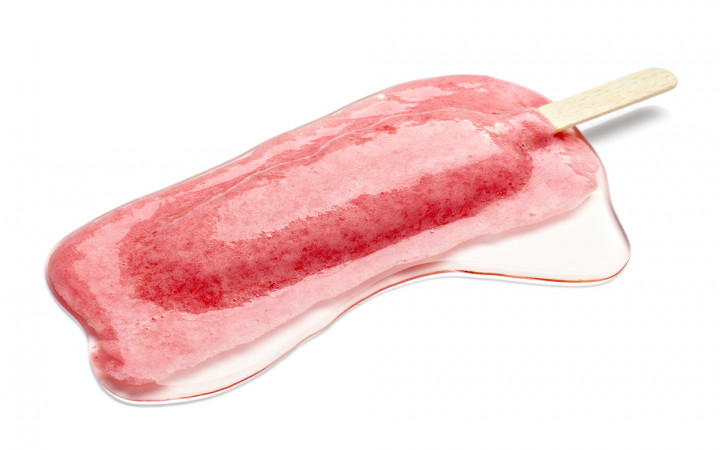
For example, when solid water (ice) gets hot, it melts and turns into liquid water. The reverse of this process is freezing.
When liquid water gets hot enough, it vaporizes into a gas. When water vapor cools off, it condenses back into liquid water.
It’s also possible for a solid to turn directly into a gas without first changing into a liquid. Dry ice, for example, is frozen carbon dioxide. When it heats up, it changes directly back to carbon dioxide gas in a process called “sublimation.”


(7 votes, avg. 4.29 out of 5)


I think that today’s wonder really does matter!!! When I was in fourth grade, we did a big unit on matter and we did an experiment where we heated up ice cubes, and the ice went from a solid to a gas. Also we did an experiment where we took a cookie tray and put it over the rising gas. and then it turned back into liquid again and it dripped down. This experiment represented the water cycle.
I love making freezer popsicles!! We have a special popsicle make that has the shape of storebought popsicles, and you fill it up, we usually do lemonade. Then you put the lid on, which is the stick. It’s a delectable treat!!
I think that tomorrow’s wonder is going to be about s’mores because they made up of chocolate, graham crackers, and marshmallows.
Happy Wednesday, Meredith! That sounds like a GREAT experiment to show how the states of matter can change so much! We bet those popsicles you and your family make are really awesome, too! They might come in handy in Wonderopolis today…it’s going to be another hot summer day!
I agree! I t is super hot outside, today. I’m having one of the popsicles I put in the freezer this morning. It tastes so cold and sweet!!
That’s a GREAT way to stay cool and give your tummy a treat, Meredith! We’re glad you enjoyed that homemade popsicle!
What is matter, wonderopolis?
Hi, Rashell! Thanks for being such a GREAT Wonder Friend! You can learn more about what matter is and the different states of matter (like solids, liquids and gasses) by exploring this Wonder of the Day®! We encourage you to visit the information here again to help you understand matter a little better!
OK.
We hope you learned LOTS of cool new facts about matter, Rashell! Thank you so much for re-exploring this Wonder and leaving us another awesome comment!
We did this matter thing in grade 3 but it was disgusting we put chocolate in our mouths then let our body heat turn it into a liquid then we did not suck the chocolate instead we spit it out on a plate then wait until morning then it turned into a soild and another one was that we lit a candle and the wax then turned into liquid and the fire turned into gas and later it cooled then the wax turned into soild again.
WOW, that sounds like a great way to see all the different forms of matter, Johno! Liquid, solid and gas! Thanks for sharing your comment with us! Sometimes even the craziest science experiments teach us something new!
That is pretty useful for me because my class and I are studying the unit into What Is Matter !!! That is pretty cool actually.
How great, Mike H! We’re excited that our science Wonder is a perfect connection to the unit you’re studying! We’re very proud of all the WONDERing you’ve been doing! Thanks for sharing your very cool comment!
I sure my friend will visit this website. Actually my teacher is the one who showed us this website. Thanks for making many wonders and I sure I will learn a lot !!! ☺ ☻ ☺ ☻
HOORAY, we hope you and your Wonder Friends have a great time at Wonderopolis! There is so much to do that the WONDERing doesn’t have to end anytime soon! Thanks for sharing your comment with us, Mike H! We hope to see you very soon!