

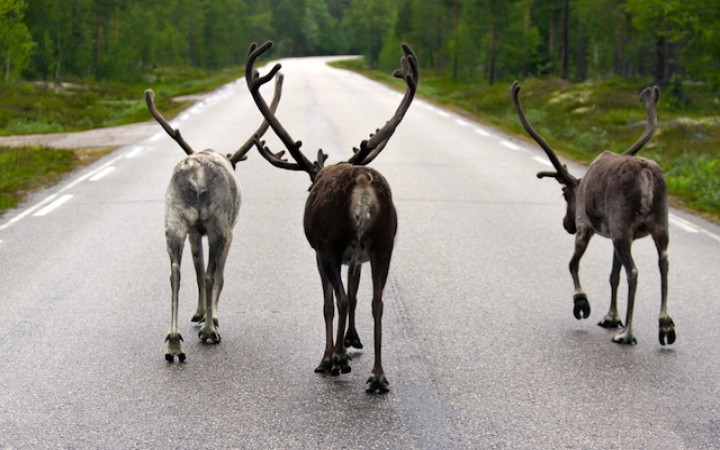
Nine of the most famous reindeer in the world live at the North Pole. But you might be surprised to learn that the Sami people of northern Sweden, Norway and Finland herd reindeer and have lived with these beautiful creatures for hundreds of years.
Keep reading and you’ll discover there’s a lot more to these creatures than you ever imagined!
Have you ever wondered…
Did you know?
Would you believe that not all reindeer live at the North Pole? It’s true!
In fact, reindeer can be found in Northern Asia, Europe, Siberia, Alaska, Canada and Greenland. In North America, reindeer are called “caribou.”
Reindeer live together in herds. Large herds may contain thousands of reindeer.
Reindeer are a nomadic species, which means they constantly move from place to place. In one year, a herd of reindeer can travel up to 3,000 miles!
Reindeer have adapted in many ways to survive the cold temperatures of their habitats. For example, a reindeer’s coat has two layers. A soft wool under-layer lies against its skin. Long, hollow “guard hairs” form the top layer.
Air inside the guard hairs traps heat close to the body, keeping the reindeer warm even in the frigid, windy temperatures of the tundra. The guard hairs also prevent body heat from escaping and melting the snow if the reindeer lies down, keeping it from getting wet and cold.
A reindeer’s nose also plays an important part in its survival. Since reindeer live in areas where food often hides under the snow, they rely on a super sense of smell to find their dinner.
Once a reindeer has sniffed out its supper, it uses its special hooves to scoop and dig through the snow to plants and food underneath.
Both male and female reindeer grow antlers. Each year the antlers fall off, and the next year the reindeer grow even bigger antlers. Both male and female reindeer use their antlers to defend against predators.
Try it out!
With just a few special ingredients and a little imagination, you can create your own magic reindeer food in a jar! Reindeer won’t be the only animals who appreciate discovering a winter snack sprinkled on your lawn — rabbits, squirrels and birds will enjoy this tasty treat, too!
Wonder words to know and use:
Still wondering?
Learn more about caribou and map the migration route of the Porcupine caribou herd of Alaska and northwestern Canada with National Geographic Xpeditions’ Caribou Migration lesson plan.
Wonder what’s next?
What’s that up in the sky? Hint: It’s not Rudolph’s red nose! Return to Wonderopolis tomorrow and we promise you’ll see the night sky in a whole new light.
For the past several weeks we have been learning about white-tailed deer. We read this Wonder because we wanted to know if female caribou have antlers. This Wonder answered our question. We really enjoyed the video of the reindeer. One topic we have been talking about in class is whether hunting is good or bad. Why is deer hunting good?
We’re so glad your question was answered by exploring this Wonder together, Mrs. Ranger’s Class! Thank you for letting us know that you liked the video, too! There are different opinions out there about whether deer hunting is good or bad. Both sides of the issue are very passionate about their beliefs!
So reindeer are just deer that have antlers and live where it’s cold? By the way, awesome website.
Hi, Luke! Reindeer are a certain species of animal, just like there are so many other different species of deer in all types of climates throughout the world! Here is a really cool link to a BUNCH of information on caribou (reindeer) from the Sand Diego Zoo: http://www.sandiegozoo.org/animalbytes/t-reindeer.html.