

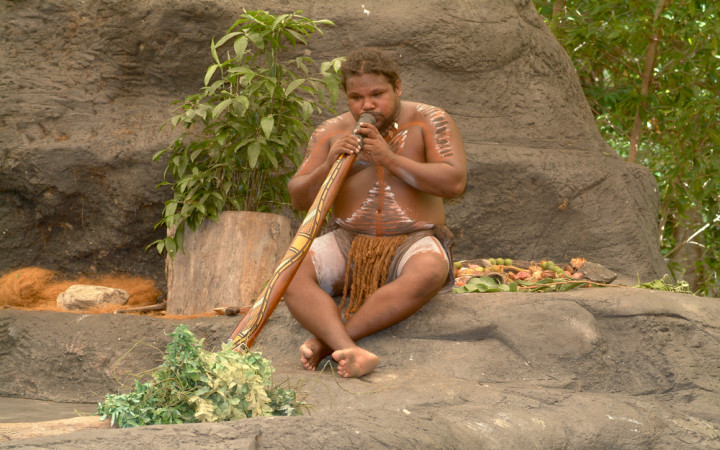
Today’s Wonder of the Day was inspired by Wonderologist. Wonderologist Wonders, “What is a didgeridoo?” Thanks for WONDERing with us, Wonderologist!
Do you love music? As you grow older, you'll get the chance to play in school bands. What instrument do you think you might like to learn to play one day?
Many children like wind instruments, such as clarinets and saxophones. Chances are, though, that you probably won't get to play what some experts believe is the oldest wind instrument in the world. What are we talking about? The didgeridoo, of course!
The didgeridoo…OK…before we go on, let's just get it out of the way. Yes, didgeridoo is a fun word to say. So go ahead. You know you want to. Didgeridoo! Didgeridoo! Didgeridoo! OK, feel better now?
As we were saying, the didgeridoo is a long wooden instrument that's shaped like either a cylinder or a cone. Most modern didgeridoos are between 3-10 feet long. Longer didgeridoos play lower notes.
Experts believe it was created over 1,500 years ago by the Aboriginal people of Northern Australia. Some people believe its origins could reach back more than 40,000 years! It remains a popular native instrument in Australia even today.
As fun as didgeridoo is to say, there are at least 40 other Aboriginal names used for the instrument throughout Australia. Three of the most popular alternative names for the didgeridoo are Yirdaki, Kanbi and Ihambilbila.
The didgeridoo — sometimes called simply the “didge" — can only play one note (called a drone). However, talented players add overtones and their own vocal sounds to give the didgeridoo a full sound filled with interesting rhythmic patterns.
Didgeridoo players use a special technique called “circular breathing" to play the instrument for long periods of time without a break in the sound. In this way, the didgeridoo is somewhat similar to the bagpipes. “Circular breathing" requires the player to breathe in through the nose while blowing stored air out of the mouth with the tongue and cheeks at the same time.
Real Aboriginal didgeridoos are usually made of a native hardwood, such as eucalyptus, or a native bamboo. Rather than hollow out these trees to make their instruments, Aboriginal craftsmen search for trees that have already been hollowed out by termites.
When the instrument is finished, craftsmen usually coat the mouthpiece end with beeswax to make it easier to play. Didgeridoo players must constantly vibrate their lips against the mouthpiece to produce the drone note.
Today, didgeridoos are made all around the world out of all sorts of materials. Many craftsmen have also started to experiment with different shapes and designs to produce new sounds.

