

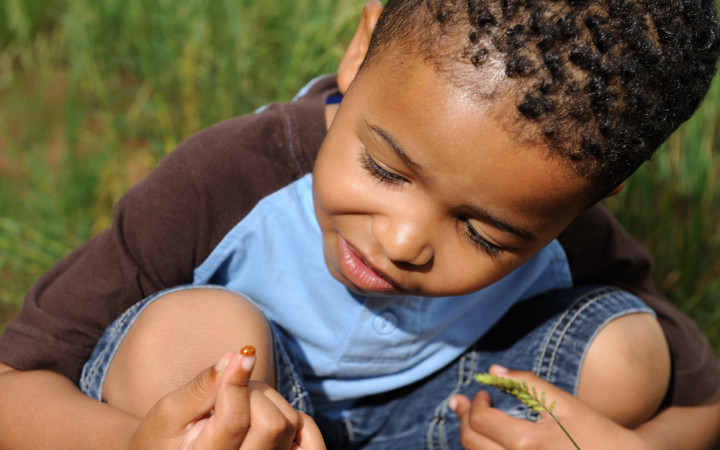
Would you believe that not all ladybugs are ladies? It's true! In fact, they're not even bugs. What's going on here?
Ladybugs are actually insects known as beetles. They are from the scientific family Coccinellidae. True “bugs" are insects, such as cicadas and aphids, that are members of the scientific order Hemiptera.
Just like other insects, there are both male and female ladybugs. Do the guys mind being called "ladybugs"? Since they don't speak our language, we suppose not.
Ladybugs are also known as "ladybirds" or "lady beetles." So how did the term “lady" get attached to these insects? Many people believe the term “lady" refers to the Virgin Mary, who is often referred to as “Our Lady."
The Virgin Mary was often portrayed wearing a red cloak in early paintings. Scholars believe European farmers came up with the term “Beetle of Our Lady" after they prayed to the Virgin Mary to save their crops from pests and noticed that a tiny red beetle came to eat the insects hurting their crops.
There are about 5,000 different species of ladybugs around the world, with more than 450 species in the United States. Although they come in many different colors and patterns, the most familiar in the United States is the seven-spotted ladybug. Its shiny red and black body is easily recognized by most children.
Ladybugs are considered good luck in many cultures. Gardeners like them especially for the same reason as those European farmers from long ago. Ladybugs eat aphids and other pests that eat plants. A single ladybug can eat as many as 5,000 insects in its lifetime.
Ladybugs can also be eaten. Birds, as well as frogs and spiders, prey on ladybugs. A ladybug's special coloring, however, does help to give it some protection.
A ladybug's distinctive coloring and markings tell predators to avoid it because it will taste terrible. And it's true!
A ladybug can secrete a fluid from its legs when threatened. The fluid is oily and tastes terrible. Over time, predators learn to associate the bad taste with the ladybug's bright colors and markings.

